


|
 Training, Orientation and Continuing Education Classes for Court Interpreters, Legal Translators and Transcriptionists and bilingual court and law firm personnel.
_img_3.jpg) |
Contact Diane to have me present or develop a course for you! |
_img_1.jpg) |
Professional court interpreters in Texas are regulated by the Judicial Branch Certification commission
http://www.txcourts.gov/jbcc/licensed-court-interpreters.aspx
Required Court Interpreter Orientation courses
The first step to get your Court Interpreter license is to take the required Orientation Course.
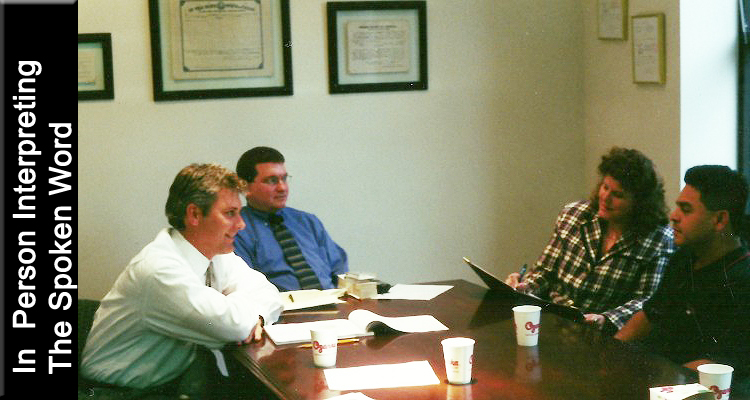
My orientation courses are approved by and comply with the JBCC requirements. I teach you the basic knowledge of the court system and process as well as the skills required to become a licensed court interpreter. In this entertaining course I include practice and insightful experiences that will allow you to envision what a great career this can be.
_img_5.jpg) My Course Interpreting for the Texas Judiciary; An Introduction for the Prospective Licensed Court Interpreter is approved by the JBCC and fulfills the 6 hour requirement It is presented on a Saturday in a classroom setting. When presented by Master Word, ASL Interpreters also receive approval by BEI for .6 Court CEU’s.
My Course Interpreting for the Texas Judiciary; An Introduction for the Prospective Licensed Court Interpreter is approved by the JBCC and fulfills the 6 hour requirement It is presented on a Saturday in a classroom setting. When presented by Master Word, ASL Interpreters also receive approval by BEI for .6 Court CEU’s.
Contact Diane for upcoming classes.
License Renewal courses and Continuing Education Requirements
Here are the LCI License Renewal Process rules
http://www.txcourts.gov/jbcc/jbcc-statutes,-rules-policies.aspx#Sec9.0
Licensed Court Interpreters are required to complete 8 hours of continuing education in courses approved by the Commission, including 2 hours of instruction in ethics. A licensed court interpreter may not receive continuing education credit for attending the same course more than once within the same license period.
My Course # 11518 Court Interpreting In Texas: Building On a Good Foundation is approved by the JBCC for 8 hours including two Ethics Credits. It includes interactive practice sessions, terminology, business skills, ethical decision making, lots of resources, and the benefit of over 35 years of experience in the real world of legal interpreting.